

"Our Ocean, Our Heritage, Our Future": African Island States Stake Their Claim in Mombasa
OUR OCEAN CONFERENCE 2026 · SIDE EVENT
Mombasa, Kenya — 16 June 2026
Africa’s Small Island Developing States (SIDS) gathered in Mombasa on 16 June 2026 to forge a common climate position and adopt a shared roadmap for their fisheries and aquaculture sectors, as the continent prepared to host the 11th Our Ocean Conference (OOC11) for the first time on African soil.
The 5th Meeting of the African SIDS Platform on Fisheries and Aquaculture (AU-SIDS Platform) was convened as an official side event of the conference, under the theme “Advancing Climate Action for Sustainable Fisheries Management and Aquaculture Development.” Delegates from Cabo Verde, the Union of the Comoros, Madagascar, Mauritius, São Tomé and Príncipe, and Seychelles, nations whose heritage, food security and economies are bound to the ocean, used the half-day session to turn six national voices into one continental position.
The meeting was organised by the AU-IBAR, with support from the European Union through the Fisheries Governance phase two project (FishGov2), and in partnership with AUDA-NEPAD.
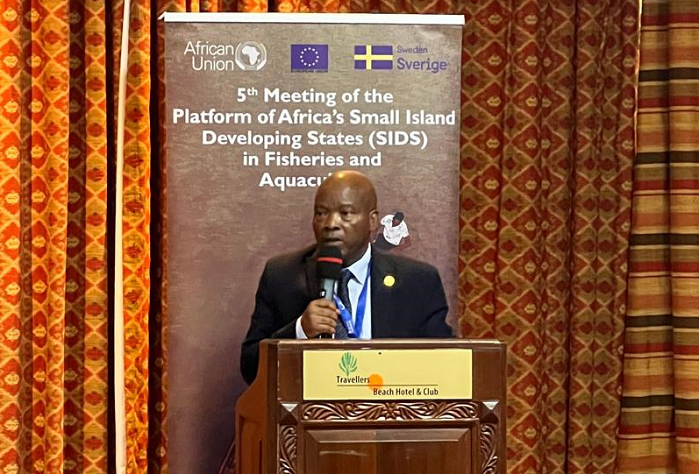
Opening the SIDS platform meeting, H.E. Moses Vilakati, African Union Commissioner for Agriculture, Rural Development, Blue Economy and Sustainable Environment, thanked the host government and framed the ocean as a shared inheritance demanding stewardship.
“Ocean as a shared resource and heritage requires respect and commitment from people dependent on it for economic prosperity and survival. The Islands’ heritage, culture and coastal life are commonly cemented by the Ocean.”
— H.E. Moses Vilakati, AU Commissioner
Blue economy at the heart of the agenda
The Commissioner reaffirmed the African Union Commission’s commitment to an inclusive blue economy, noting that the ocean underpins it entirely.
“I wish to reaffirm the commitment of the African Union Commission to promoting sustainable and inclusive blue economy development across the continent, and recognizing the fact that ocean is the mainstay of the blue economy.”
— H.E. Moses Vilakati, AU Commissioner
He told delegates that he had elevated the sector within his own priorities, adding that he had “prioritised fisheries, aquaculture and aquatic ecosystems within Blue Economy in my 100 days flagship programme.” He pointed to support channeled through AU-IBAR’s EU-funded FishGov2 project and a parallel Swedish-funded initiative on aquatic biodiversity — both of which, he said, had assessed the devastating impact of climate change on the continent’s fisheries and aquatic ecosystems, and underscored the need for stronger coordination.
The Commissioner situated the platform’s work within a wider architecture of island advocacy: the African Island States Climate Commission (AISCC), the Moroni Comoros Declaration calling for global recognition of island states, and the Great Blue Wall Initiative — a regional push targeting two million blue jobs and benefiting over 70 million people by 2030. He also stressed core priorities, including ratification of the BBNJ Agreement on biodiversity beyond national jurisdiction, and the integration of indigenous knowledge into climate-resilient, nature-based fisheries' management.
The meeting’s outcomes
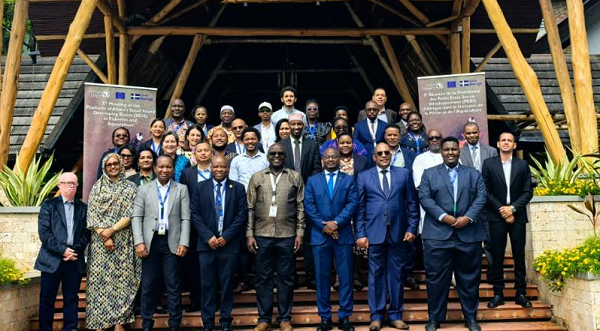
The session produced concrete results.
A validated Strategic Action Plan. Delegates validated the Strategic Action Plan for the African SIDS Platform — a framework for joint work plans, coordination, partnerships, advocacy, and resource mobilisation, aligned with the African Fisheries Reform Mechanism (AFRM). The plan is designed to give the islands a stronger, coordinated presence in the decision-making processes of key global instruments and fora.
A platform declaration. The meeting adopted a declaration anchoring the platform’s priorities in a nature-based “Blue Pact” to protect the ocean. It calls for integrating the African SIDS Platform into global and continental processes to unlock blue finance, supporting a knowledge platform to capture indigenous knowledge, and building a network of African Union Centres of Excellence in fisheries, aquaculture and aquatic biodiversity to strengthen research, data and the islands’ stake in global blue carbon markets.
Common African SIDS positions. Delegates agreed on a set of common positions to carry into the main Our Ocean Conference negotiations, ensuring the islands speak with one voice across the conference’s themes.
A focus on finance and transparency. A recurring concern was the difficulty of accessing finance for climate adaptation and resilience — identified as a shared obstacle the action plan is intended to help overcome through coordinated partnerships. The meeting also championed greater transparency in fisheries governance, working alongside the Fisheries Transparency Initiative (FiTI), and concluded that the African SIDS are leading the way on the issue.
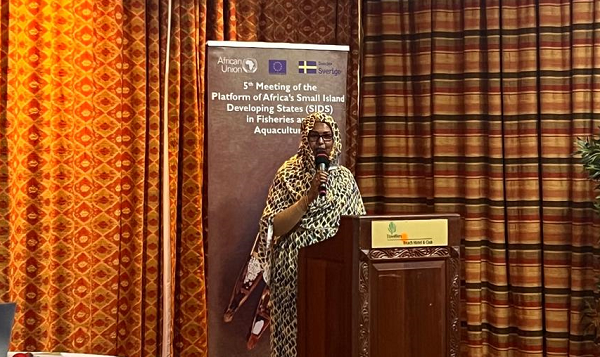
That message; that the smallest states can be among the most ambitious, became the meeting’s defining note. In closing remarks delivered AU-IBAR Director, Huyam Salih, on behalf of AU Commissioner H.E. Vilakati, it was observed that:
“The African SIDS are proudly leading the way … proving that small island developing states are indeed Big Ocean States.”
— Closing remarks on behalf of H.E. Moses Vilakati, AU Commissioner
Looking ahead
For the platform’s members, meeting on the margins of OOC11 carried strategic value: it allowed the six island states to take part in the conference sessions, raise awareness of the platform, and advocate a unified position on climate impacts and the adaptation and resilience measures they need. The African Union Commission, the Commissioner said, remains committed to mobilising partnerships, prioritising innovation and collective action, and transforming the continent’s ocean resources into levers of inclusive and sustainable growth in line with AU Agenda 2063.
“Through partnerships, innovation and collective action, we can transform Africa’s ocean resources into levers of inclusive and sustainable growth.”
— H.E. Moses Vilakati, AU Commissioner
Thanking the European Union, the Swedish Government and the Kingdom of Norway for their continued support, the Commissioner closed with the conference’s own refrain:
“Together, we can secure a prosperous ‘Our Ocean, Our Heritage, Our Future’ and sustainability.”
— H.E. Moses Vilakati, AU Commissioner
As OOC11 continues through 18 June, the African SIDS Platform leaves Mombasa with not only a declaration on paper, but a shared voice, a validated plan, and a seat at the table.
A global conference comes to African shores
OOC11 runs from 16 to 18 June 2026 across Mombasa and Kilifi under the theme “Our Ocean, Our Heritage, Our Future.” As the first edition of the conference held on the continent, it highlights Africa’s growing leadership in ocean governance and coastal sustainability, convening governments, scientists, civil society, youth and the private sector to drive practical solutions and mobilise measurable commitments.
Since its launch in 2014, the conference series has generated more than 2,600 commitments valued at over US$140 billion across six priority areas: marine protected areas, sustainable fisheries, marine pollution, the blue economy, climate change and maritime security. OOC11 places Africa’s priorities at the centre — particularly ocean-climate resilience, conservation and sustainable ocean-based economies — while reinforcing Kenya’s role as a leader in ocean innovation and community-driven management.
More on the conference: ouroceankenya.com