

Somalia Takes Bold Steps to Transform USD 8 Billion Feed and Fodder Sector
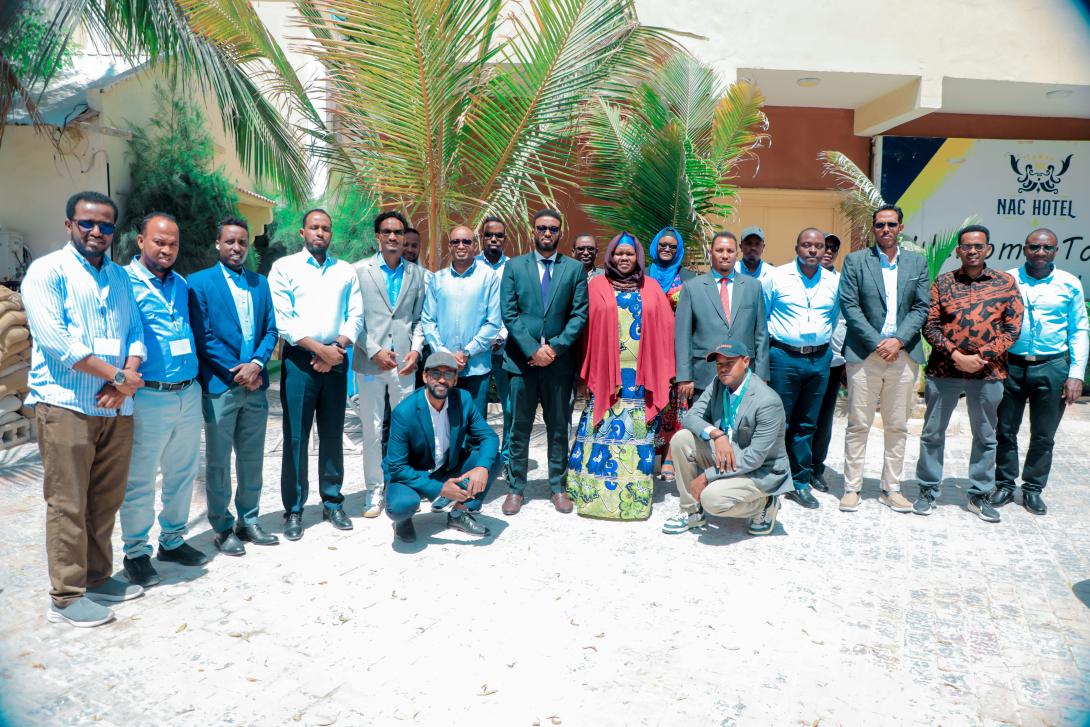
Mogadishu, 18 February 2026 – Somalia is charting an ambitious path to transform its estimated USD 8 billion feed and fodder sector from a chronic source of vulnerability into a driver of economic resilience, following a landmark three-day technical workshop that brought together government, development partners and private sector actors to finalize long-awaited policy reforms.
The high-level workshop, jointly organized by Somalia's Ministry of Livestock, Forestry and Range and the African Union-Interafrican Bureau for Animal Resources from February 16-18 under the Resilient African Feed and Fodder Systems Project, produced a comprehensive communiqué outlining concrete steps to operationalize the Somalia National Feed Policy, establish a regulated early warning system, and unlock innovative financing mechanisms that reduce dependence on external donors.
A Sector in Crisis
Somalia's livestock sector contributes 45% to GDP and 60% of foreign exchange earnings, supporting the livelihoods of 60% of the population. Yet the sector faces chronic feed deficits of 10-60% even in non-drought years. The human and economic toll has been devastating: over 10 million animals lost in the past decade, including 6.4 million during the 2016-17 drought and 3.8 million in 2021-22, translating to more than USD 7.5 billion in economic damage.
Director General Mr. Mohamed Saney Dalmar emphasized that livestock remains the backbone of Somalia's economy yet continues to be undermined by recurrent droughts, conflict and weak feed systems. He stressed that the delays in finalizing and implementing policy instruments have affected Somalia's ability to respond to unfolding droughts and that the country must move from fragmented, emergency-driven interventions to a coordinated national framework that treats feed and fodder as a strategic economic sector.
Continental Context and Policy Framework
Dr. Sarah Ashanut Ossiya, AU-IBAR's RAFFS Project Coordinator, framed Somalia's challenge within Africa's broader livestock paradox, noting that the continent holds 30% of global ruminant resources yet produces only 3.9% of global feed resources and just 2.8% of global milk and meat output. She highlighted the AU Policy Framework for Economic African Feed and Fodder Sectors and Industries, endorsed by African Union Heads of State on February 14, 2026, just days before the Mogadishu workshop, which recognizes feed as foundational to livestock transformation.
"The question we must ask is: does Somalia have a livestock economy, or does it simply have tropical livestock units repeatedly exposed to crisis?" Dr. Ossiya challenged participants. "A true livestock economy begins with the ability to feed animals reliably and at scale."
Three Strategic Pillars
The workshop undertook comprehensive technical reviews across three strategic areas:
Policy Framework and Financial Sustainability
The National Policy Review Team conducted critical assessment of draft instruments, concluding that Somalia's National Feed Policy and National Fodder Development and Management Strategy require enhancement to articulate compelling investment attraction strategies, establish sector-internal financing mechanisms including carcass levy systems, ensure alignment with General Statistics System standards for data integrity, and define concrete capacity building strategies for attracting and retaining technical talent.
Data Ecosystem Operationalization
The Somalia Data Team validated a comprehensive set of indicators organized into four clusters covering feed and seed inputs and availability, fodder production quality and seasonality, governance and institutional capacity, and market infrastructure, prices and storage. The team endorsed a consolidated master data collection tool with standardized units and regional disaggregation, alongside a functional dashboard prototype ready for deployment with integration to national statistical systems and early warning triggers.
This data ecosystem establishes the foundation for Somalia's first regulated Feed and Fodder Early Warning System. Unlike current climate-centered systems that rely on rainfall and water access, the new approach uses feed-centric triggers that activate business-linked responses by private producers, traders and insurers before livestock losses escalate.
Business Investment and Innovative Financing
The workshop endorsed transformative financing models that shift drought response from relief to enterprise-driven solutions. Under the proposed Securing Access to Feed in Emergencies model, government provides enabling infrastructure including land preparation, water systems and fencing, while private sector operators manage commercial feedlot operations. During droughts, animals move from degraded rangelands to feedlots for finishing rather than being sold at distressed prices into saturated markets.
Central to the model's sustainability is a carcass levy system, a small charge collected at slaughter or export points dedicated specifically to financing fodder reserves, infrastructure and strategic investments. This sector-internal revenue generation mechanism, anchored in forthcoming policy and legal frameworks, aims to reduce external donor dependency and create sustainable domestic resource mobilization.
Strong Development Partner Commitment
The workshop benefited from robust development partner engagement. IFAD confirmed willingness to prioritize and front-load fodder-related investments within current programmes, providing early seed capital to pilot the new financing approach. The Islamic Development Bank highlighted its new regional livestock value chain programme covering ten-member countries, including Somalia. Zep-Re revealed that approximately 5,000 Somali pastoralists are currently covered by drought risk insurance, with USD 3 million in payouts ready for disbursement.
Mr. Yahya Mohamud of FAO emphasized FAO's longstanding support to fodder production, drought response and data and early warning systems. UNDP also underscored that it is integrating feed and fodder into its wider resilience portfolio and supporting data, policy and institutional systems for stronger value chains.
Ambitious Implementation Timeline
The communiqué, endorsed by the Deputy Minister of Livestock Hon. Adan Mohamed Ali, Director General Mr. Mohamed Saney Dalmar, AU-IBAR Director Dr. Huyam Salih represented by Dr. Sarah Ossiya, and development partners including IFAD, IsDB, FAO, UNDP and Zep-Re, commits to a comprehensive set of actions including establishing a National Policy Reform Team, finalizing and adopting the National Feed Policy and National Fodder Development and Management Strategy, operationalizing the feed and fodder dashboard, completing Federal Member State validation workshops and parliamentary briefings, implementing sector-internal financing mechanisms including the carcass levy system, fast-tracking the Feed and Fodder Authority establishment, and identifying pilot feedlot sites. By February 2027, Somalia will have a fully operational early warning system, commenced feedlot operations, and established strategic reserves, fundamentally transforming how the country manages feed security and livestock resilience.
Regional and Continental Significance
Somalia's work is aligned with the continental feed and fodder agenda, with Member States now reporting on feed and fodder development under the CAADP Kampala Declaration. The feed and fodder data ecosystem being implemented in Somalia is part of a transformative initiative across six RAFFS countries including Zimbabwe, Kenya, Uganda, Nigeria and Cameroon, providing a template for data-driven livestock transformation across the continent.
"Within one to two years, tangible changes will be visible," Dr. Ossiya predicted. "Within ten years, Somalia's livestock economy could look fundamentally different, anchored by robust feed production, regulated early warning, private investment, and integrated value chains."
The Minister of Livestock, Forestry and Range, who formally closed the workshop, reaffirmed the Federal Government's commitment to providing leadership, coordinating relevant institutions, mobilizing technical cooperation with partners, and ensuring the feed and fodder agenda remains aligned with national priorities. "This is not optional," he stressed. "It is a national imperative for food security, economic growth, and the livelihoods of 60% of our population."