

Strengthening Marine Protected Area Governance in West Africa: From Commitment to Implementation
The Regional Training Workshop on the Implementation and Governance of Marine Protected Areas (MPAs), held from 20–22 April 2026 in Dakar, Senegal, marked a decisive step toward transforming the governance of marine ecosystems across the Sub-Regional Fisheries Commission (SRFC) region. Convened by AU-IBAR in collaboration with SRFC, with support from the Swedish International Development Cooperation Agency (SIDA), the meeting moved beyond dialogue to define actionable pathways for strengthening governance, financing, and regional coordination of MPAs.
A Clear Outcome: From Fragmentation to Coordinated Action
The most significant outcome of the workshop was the collective recognition that MPAs in West Africa are no longer constrained by absence, but by effectiveness. While many countries have established MPAs, their impact is limited by governance fragmentation, weak coordination, and insufficient financing.
Participants aligned around a shared direction:
- Shift from designation of MPAs to effective management and performance
- Strengthen regional cooperation and transboundary governance
- Move toward sustainable financing and data-driven decision-making
This signals a transition from conservation as policy intent to conservation as a delivery system within the Blue Economy.
Strategic Significance: Why This Meeting Matters
The workshop is significant at three interconnected levels:
1. Continental Alignment
The meeting reinforced the role of MPAs within the African Union Blue Economy Strategy, linking biodiversity conservation with economic development, food security, and climate resilience.
2. Governance Shift
It emphasised that the core challenge is not technical alone, but institutional:
“Creating a protected area is a first step; managing it in an inclusive, effective and sustainable way is the real challenge.”
3. Regional Integration
The workshop elevated the importance of transboundary cooperation, recognising that marine ecosystems are shared and cannot be governed within national silos.
Opening Remarks: A Unified Policy Message
The opening session set a strong strategic tone, with consistent messages across institutions:
- AU-IBAR underscored the urgency of strengthening governance systems and building capacity for effective MPA management.
- SRFC reaffirmed its commitment to supporting Member States and promoting sustainable fisheries governance.
- Sida positioned MPAs as critical to ecosystem protection and sustainable development, aligned with Agenda 2063.
- FAO highlighted persistent governance and financing gaps, calling for practical, implementable solutions.
- ECOWAS emphasized resilience, inclusive governance, and the need for stronger regional coordination.
- Government of Senegal reinforced the importance of moving from establishment to effective management, noting the transboundary nature of marine resources.
A unifying message emerged:
MPAs are not just conservation tools—they are governance systems that determine whether biodiversity, livelihoods, and economies can be sustained.
Key Highlights from the Meeting
1. Evidence-Based Diagnosis of Challenges
The workshop identified critical structural constraints:
- Fragmented governance and overlapping mandates
- Weak legal harmonisation across countries
- Heavy dependence on external funding
- Limited technical and human capacity
- Weak monitoring, control, and surveillance systems
- Low integration of scientific and indigenous knowledge
2. Capacity Strengthening Through Structured Learning
Participants were trained across six core areas, including:
- MPA design and regulatory frameworks
- Monitoring and evaluation systems
- Sustainable financing mechanisms
- Climate-resilient MPA management
This directly strengthened institutional capacity for implementation.
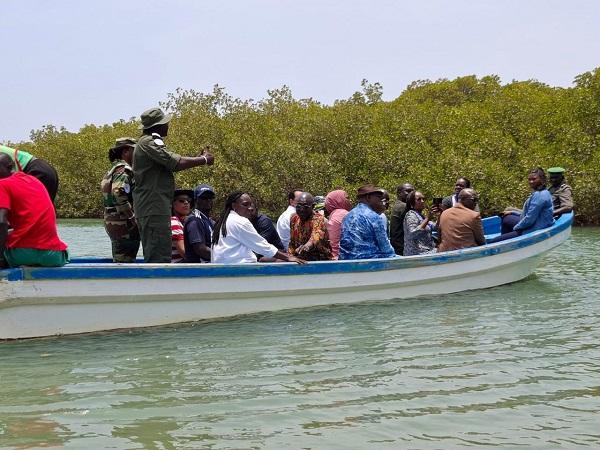
3. Practical Learning: The Somone MPA Experience
A field visit to the Somone Marine Protected Area provided a working model of:
- Community-based governance
- Sustainable financing through ecotourism
- Integrated conservation and livelihood systems
This demonstrated that effective MPAs are achievable when governance, community engagement, and sustainability align.
4. Strong Emphasis on Co-Management
Countries highlighted the importance of involving local communities, women, and youth, shifting governance toward more inclusive and participatory models.
5. Consolidated Regional Vision
Participants agreed on the need to:
- Develop transboundary MPAs
- Harmonize policies across countries
- Strengthen regional data and knowledge systems
Core Outcomes of the Workshop
The meeting delivered five concrete outcomes:
- Increased awareness of the role of MPAs in biodiversity and fisheries sustainability
- Strengthened technical capacity for MPA governance
- Shared best practices across Member States
- Identification of priority challenges and actions
- Enhanced regional cooperation, including transboundary approaches
These outcomes form a practical foundation for implementation.
From Recommendations to Action
The workshop moved beyond diagnosis to actionable priorities:
- Establish sustainable financing mechanisms (trust funds, blue economy investments)
- Strengthen monitoring and surveillance systems, including digital tools
- Institutionalize co-management with communities
- Integrate MPAs into climate adaptation strategies
- Build regional data-sharing platforms for decision-making
The emphasis is clear: governance must be coordinated, resourced, and measurable.
Conclusion: A Turning Point for MPA Governance
This workshop represents a shift from fragmented efforts to a coherent regional approach to marine governance. It confirms that the future of MPAs in Africa lies not in expansion alone, but in effectiveness, inclusivity, and sustainability.
The adoption of the communiqué and commitment by Member States signal readiness to act. The next phase will depend on translating these commitments into institutional reforms, investments, and coordinated regional delivery.
In essence, the meeting has reframed MPAs from protected spaces into strategic assets for Africa’s blue economy, climate resilience, and long-term development.