

A system approach to livestock marketing, APMD validates the Luna case as an exemplary and bankable model
Government officials, private sector leaders, financial institutions, producer representatives, and development partners convened in Addis Ababa for a two-day national validation workshop to review and strengthen the Luna livestock marketing system case study.
The validation workshop brought together key institutions including the Ministry of Agriculture, the Ministry of Trade and Regional Integration, the Ethiopian Agricultural Authority, the Ethiopian Cooperative Commission, the Development Bank of Ethiopia, industry associations, and representatives from pastoral producer groups to assess findings from the case study and draw lessons for policy, investment, and replication.
The study, facilitated by the African Union – Interafrican Bureau for Animal Resources (AU-IBAR) through the African Pastoral Markets Development (APMD) platform, documented the operational experience of Luna as an integrated livestock export model linking pastoral producers to formal meat export markets. It examined regulatory oversight, financing structures, producer integration, land tenure dynamics, insurance mechanisms, and investment viability within Ethiopia’s livestock sector.
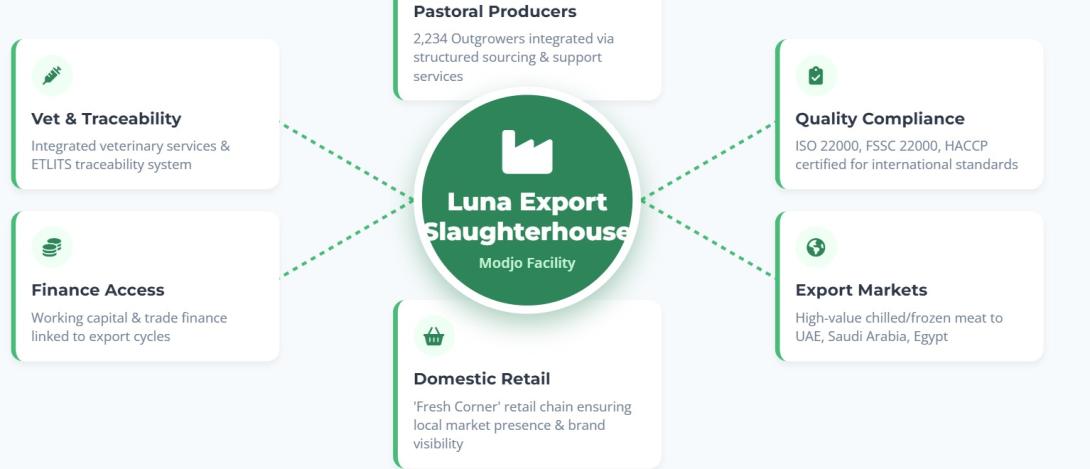
Stakeholders underscored that the Luna model represented more than a single enterprise’s performance but a systems-based approach that integrated structured pastoral producer engagement, quality assurance and compliance, export market alignment, financing and risk sharing mechanisms, and, social inclusion and gender participation. 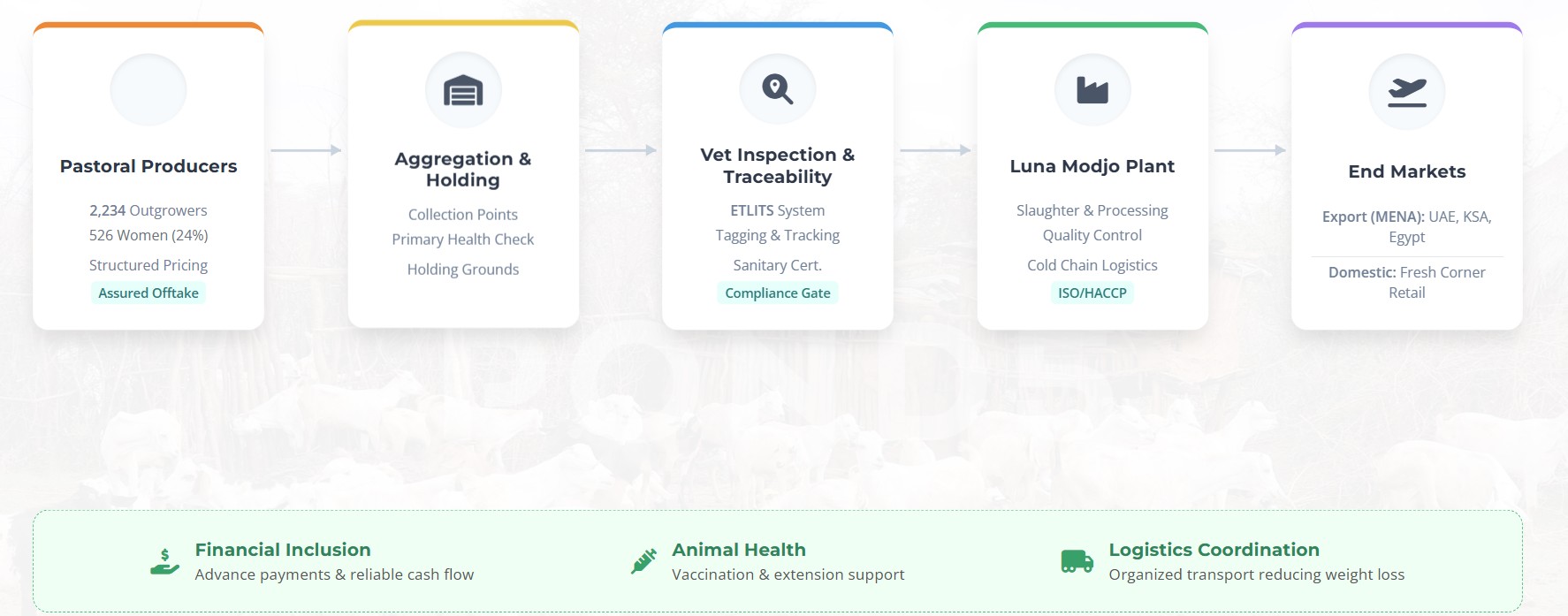
Discussions highlighted how regulatory clarity, compliance systems, investment frameworks, and financial mechanisms collectively shaped the competitiveness of Ethiopia’s meat export sector. The Ministry of Agriculture(MoA) emphasized its ongoing efforts to strengthen livestock production systems and align upstream supply with export standards, whereas the Ministry of Trade and Regional Integration (MoTRI) outlined measures to enhance market access and trade facilitation for livestock products.
The Development Bank of Ethiopia provided insights into financing constraints and opportunities within livestock value chains, noting the importance of structured sourcing, contract-based supply, and risk mitigation mechanisms in improving bankability. Further discussions pointed to the need for tailored livestock financing instruments, improved working capital solutions and stronger integration of insurance products into value chain operations.
The validation further explored livestock risk-sharing mechanisms, including index-based insurance models and their role in stabilizing supply from pastoral areas. Stakeholders noted that climate resilience was directly linked to export reliability and long-term investment confidence. Therefore, embedding insurance and risk mitigation tools into commercial livestock systems was identified as a critical lever for scaling Ethiopia’s meat export sector.
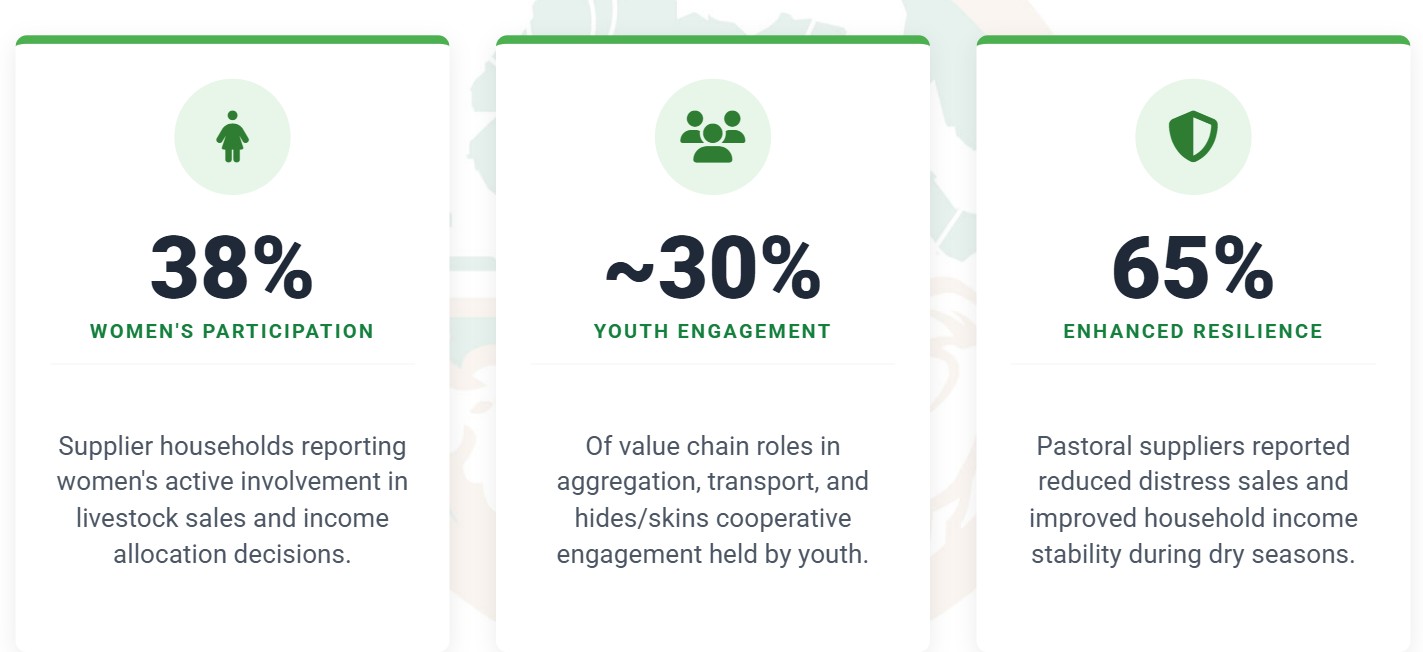 The case study findings demonstrated measurable female participation across livestock and crop organized groups, as well as in capacity-building programs. The validation emphasized that structured market access improved income stability and resilience among pastoral households, and, highlighted the importance of deliberate inclusion strategies to ensure women, youth, and smallholder producers benefit from export growth.
The workshop concluded that while Ethiopia had established a supportive legal and regulatory framework for livestock export development, scaling required strengthened integration across production systems, finance, insurance, and market infrastructure.
The Addis Ababa validation, therefore, marked an important step in APMD's ongoing efforts in showcasing and translating transformative practical field experience into structured knowledge that can guide future livestock sector investments and enhance Africa’s participation in regional and global meat markets.