

West Africa Advances Inclusive Fisheries Governance with Establishment of Small-Scale Fisheries Technical Working Group
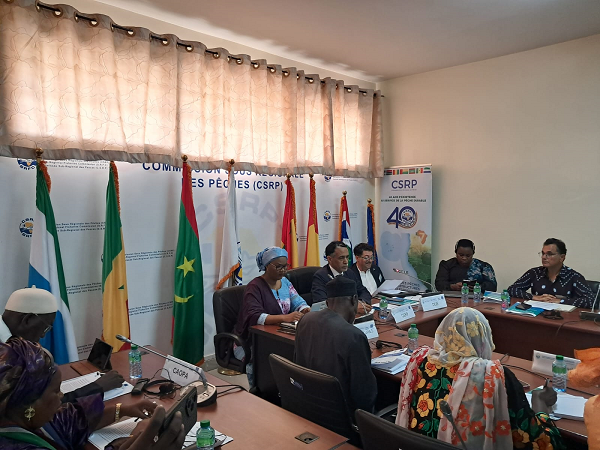
Dakar, Senegal, 5–7 May 2026
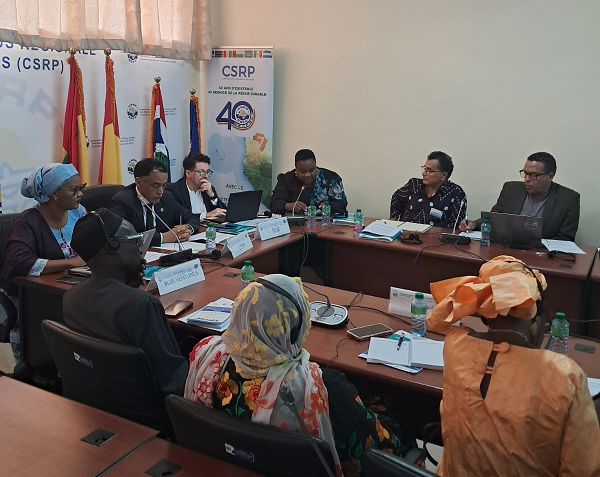
The establishment of the Technical Working Group on Small-Scale Fisheries in the CSRP/SRFC zone marks an important step towards more coordinated, inclusive and evidence-based fisheries governance in West Africa. Convened under the AGIR-INN Project of the West Africa Sustainable Ocean Programme, the regional workshop brought together Member States, fisheries authorities, research institutions, professional organisations, technical partners and regional actors to strengthen the governance of a sector that remains central to food security, employment, coastal livelihoods and the blue economy.
The workshop responded to a growing governance challenge in the sub-region. Small-scale fisheries are a cornerstone of coastal economies, yet the sector faces increasing pressure from resource depletion, climate change, maritime safety risks, illegal, unreported and unregulated fishing, conflicts between artisanal and industrial fleets, and the cross-border mobility of fishing communities. Current governance systems remain insufficiently harmonised, while regional coordination and data-sharing mechanisms need to be strengthened. The new working group is therefore designed as a permanent sub-regional platform for dialogue, technical support, coordination and policy coherence.
The expected outcomes of the workshop were practical and institutional. These included the formal establishment and operationalisation of the Technical Working Group, the adoption of its Terms of Reference and Road Map, the identification of sub-regional guidelines for managing small-scale fishing zones and resource-use conflicts, the consolidation of synergies with continental and international initiatives, and the definition of priorities for community-based monitoring, maritime safety, and data governance. The workshop also aimed to finalise the Terms of Reference for a regional diagnostic study on small-scale fisheries, including migration patterns, value chains, and social and gender dimensions.
 |
 |
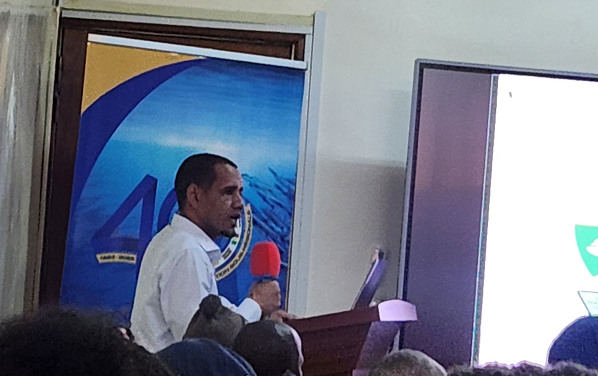 |
Speaking on behalf of AU-IBAR, the Director, Dr Huyam Salih, Mrs Hellen Guebama commended the Sub-Regional Fisheries Commission for its leadership, noting that AU-IBAR and SRFC share “a common goal” in promoting good governance in small-scale fisheries across the region and the continent. She underscored that fisheries and aquaculture are central to Africa’s animal resources agenda and are guided by the Policy Framework and Reform Strategy for Fisheries and Aquaculture in Africa and the Africa Blue Economy Strategy.
Dr Salih highlighted the scale and urgency of the sector’s governance challenges. Small-scale fisheries account for more than 60 percent of Africa’s fisheries production, feed more than 200 million Africans, and contribute 20 percent or more of animal protein in Africa. Yet, the sector remains underdeveloped, while West Africa records the highest impact of illegal, unreported and unregulated fishing on the continent, with an estimated 2.7 million tonnes unreported annually.
The establishment of the working group therefore contributes directly to fisheries governance by moving the region from fragmented engagement to a structured mechanism for continuous technical dialogue, evidence generation and policy support. It creates a space where Member States, professional organisations, researchers, women in fisheries value chains, migrant fishers and technical partners can jointly examine governance problems and translate regional priorities into implementable actions. The proposed Terms of Reference define the group as a permanent sub-regional technical body coordinated by the CSRP, with a mandate to support harmonised and resilient management of small-scale fisheries, including migrant artisanal fishing, while linking community priorities to the fight against IUU fishing.
A major contribution of the working group is its emphasis on knowledge-based governance. The workshop methodology was designed to be participatory and multi-stakeholder, combining science, data and the empirical knowledge of fishing professionals. It also gave specific attention to integrating traditional knowledge from small-scale fishers and women processors into information and analysis systems, improving transparency in fisheries data, and addressing pressures from fishmeal and fish oil processing facilities on small pelagic fish.
The Road Map for 2026–2030 positions the Technical Working Group as the reference sub-regional technical framework for strengthened, inclusive and sustainable governance of small-scale fisheries. It is expected to contribute to food security, coastal community resilience, conservation of fishery resources and a sustainable blue economy. Its strategic ambition is to generate practical technical guidance for Member States, strengthen complementarity among national approaches, improve coordination between small-scale fisheries governance and MCS systems, and promote recognition and protection of small-scale fishing zones.
The Road Map is structured around seven pillars: operationalisation of the working group; knowledge generation and harmonisation; sustainable management of small-scale fishing zones and conflict prevention; strengthening the interface between small-scale fisheries, MCS and IUU fishing responses; implementation of the FAO Voluntary Guidelines for Small-Scale Fisheries; safety at sea and community resilience; and partnerships and resource mobilisation. Together, these pillars provide a governance pathway from consultation to implementation, from data gaps to shared knowledge, and from policy principles to measurable outcomes.
A key highlight of the AU-IBAR presentation by Mrs Hellen Guebama and Mr Delvis Fortes was the linkage between the regional initiative and the continental reform agenda. The presentation recalled that the PFRS was adopted in 2014 to facilitate the transformation of Africa’s fisheries and aquaculture for food, livelihoods and wealth. It further highlighted the companion 10-Year Action Plan for Small-Scale Fisheries Development in Africa, endorsed by the STC-ARDWE in 2019, as a tool to help Member States and stakeholders increase benefits from the small-scale fisheries sector in line with continental food security goals.
The presentation further emphasised that small-scale fisheries reform in Africa must address weak data, low levels of organisation, inadequate centralised management, and limited recognition of small-scale fisheries within national economies. The expected outcomes of reform include better recognition of the role of small-scale fisheries in livelihoods, food and income; stronger bilateral and regional cooperation in managing shared resources; decent working conditions for fishers and fish workers; improved participatory management; and wider application of the FAO Voluntary Guidelines.
The presentation also showed how AU-IBAR’s work has already helped strengthen coherence in fisheries policies across Africa. Through FishGov2-related support, 18 AU Member States were reported to be fully aligned with the PFRS, while additional Member States received support to develop realistic fisheries and aquaculture policies. The presentation also highlighted work on value addition, post-harvest loss reduction, fish trade corridors, women and youth investment in fisheries trade, data collection, fisheries statistics, and MCS capacity development.
Another important governance message from the presentation was the role of the African Fisheries Reform Mechanism as a continental platform for coordination, information sharing, knowledge generation, advocacy, policy development and resource mobilisation. The Small-Scale Fisheries Development Working Group under this mechanism focuses on inclusive policy coherence, integration of migrant fishers, participatory management, data collection and dissemination, value-chain analysis, gender mainstreaming, youth participation, and the recognition of small-scale fisheries in national economies.
The workshop, therefore, contributes to fisheries governance in three important ways. First, it strengthens institutional coherence by linking the CSRP sub-regional process to continental frameworks, including the PFRS, the Africa Blue Economy Strategy, the FAO Voluntary Guidelines, and AU-IBAR’s fisheries reform mechanisms. Second, it strengthens participatory governance by recognising the role of professional organisations, women processors and migrant fishers as knowledge holders and decision-shaping actors. Third, it strengthens implementation capacity by placing data, monitoring, road maps, focal points, technical guidelines and annual reviews at the centre of the working group’s operation.
The initiative also responds directly to the realities of West African fisheries, where fishers often operate across borders and where shared stocks require coordinated management. By addressing small-scale fishing zones, conflict prevention, safety at sea, data governance and participatory surveillance, the working group provides a practical mechanism for turning regional dialogue into coordinated action.
As Mrs Guebama noted, AU-IBAR is also initiating the development of a second 10-Year Action Plan for African Small-Scale Fisheries and a 10-Year Action Plan for African Aquaculture Development, with the intention of engaging partners and actors in an inclusive, coordinated and consistent process. This makes the Dakar workshop not only a regional milestone, but also an important contribution to Africa’s wider agenda for sustainable, inclusive and resilient fisheries governance.