

World Donkey Day 2026: Preserving Africa’s Donkeys for Livelihoods, Welfare and Resilience
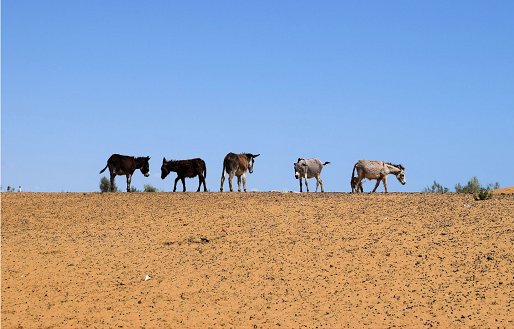
On World Donkey Day, AU-IBAR joins partners across Africa and globally in recognising the important role donkeys play in rural life. Across the continent, millions of households depend on donkeys for transport, farming, access to water, markets, schools, health services and household income. In many communities, donkeys also reduce the heavy labour burden that often falls on women and children.
Africa is home to an estimated 50 million donkeys, making the continent a major custodian of this vital animal resource. For many rural families, donkeys are not simply working animals; they are part of the daily infrastructure that keeps households and communities moving. When donkey populations decline, the impact is immediate: families lose transport, income, access to services and resilience.
This is why AU-IBAR and AU Member States have taken strong action to protect donkeys from the growing threats of illegal trade, unsustainable slaughter and population decline. Following the African Union Executive Council Decision adopted in February 2024, AU Member States advanced a moratorium on the slaughter of donkeys for the skin trade. This reflects the collective commitment of 55 AU Member States to protect donkeys as a shared continental resource.
AU-IBAR has also supported the development of the Pan-African Strategy for the Preservation, Welfare and Sustainable Use of Donkeys in Africa. The strategy provides a long-term framework for improving donkey health and welfare, strengthening policies and legislation, promoting research and knowledge-sharing, raising awareness, mobilising investment and building partnerships for coordinated implementation.
The strategy is anchored on six priority areas. These include improving donkey health, welfare, husbandry and access to veterinary care; strengthening sustainable donkey production systems and value chains; developing and harmonising policies and legislation to combat illegal trade and exploitation; improving research, monitoring, data collection and knowledge-sharing; increasing awareness of the value of donkeys and donkey welfare; and strengthening partnerships, advocacy and resource mobilisation for coordinated continental and global action.
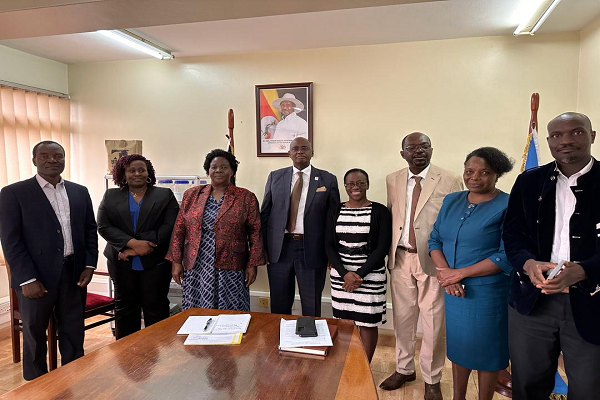
Speaking during the 4th International Workshop on Donkeys in Brazil, AU-IBAR Director, Dr Huyam Salih, emphasised that donkey protection is both a welfare and development priority:
“With an estimated 50 million donkeys in Africa, these animals are not only working animals; they are lifelines for rural households. They carry water, food, agricultural produce and hope. When donkey populations decline, communities lose transport, income, access to services and resilience. Africa’s moratorium on donkey slaughter for the skin trade and the Pan-African Strategy for Donkey Welfare are therefore not only about animal protection; they are about safeguarding livelihoods, supporting women and children, and preserving a critical resource for rural development.”
The Brazil workshop, held in Salvador under the theme “Donkeys of Brazil: A Sustainable Future - Economic Impact, Biotechnological Innovation, and International Skin Trade,” provided an important platform for sharing Africa’s experience. It also reinforced a key lesson: the donkey skin trade is global, mobile and adaptive. If action is not coordinated, pressure can simply shift from one region to another.
In line with this year’s theme “Preserving the African Donkey Is Our Collective Responsibility”, Partnership remains central to progress. AU-IBAR has worked with AU Member States, Regional Economic Communities, The Donkey Sanctuary, Brooke, FAO, WOAH and the African Platform for Animal Welfare to support policy dialogue, technical guidance, advocacy, welfare standards, awareness and implementation. These efforts are helping to build a shared movement around donkey preservation, responsible use and rural livelihood protection.
On World Donkey Day, AU-IBAR calls for stronger national-level implementation of the AU moratorium, harmonised legislation, coordinated enforcement against illegal slaughter and trafficking, increased investment in donkey health and welfare, improved monitoring of donkey populations and trade, and greater recognition of donkeys as essential rural assets.
Protecting donkeys is not only an animal welfare issue. It is about protecting livelihoods, women’s labour, children’s access to education, household income, food systems, climate resilience and the future of rural communities. Africa has taken an important step. What matters now is follow-through: turning commitments into action, strengthening partnerships on the ground and ensuring that donkeys continue to support the communities that depend on them every day.