

More Fish, More Jobs, Fairer Returns: The Road Beyond FishGov2
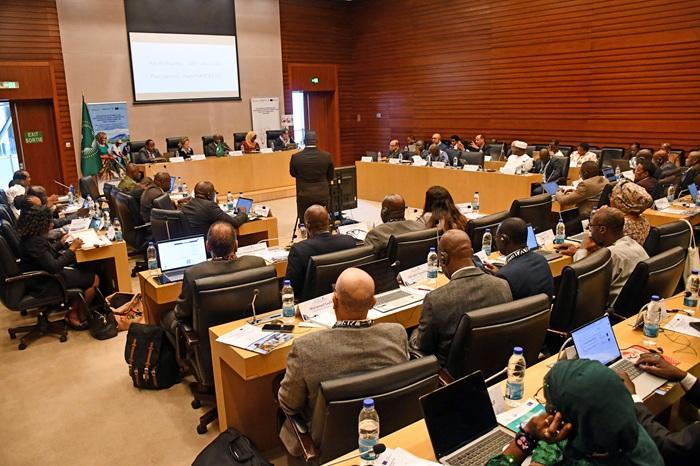
For more than a decade, Africa has been quietly rewiring how it governs its fish. Not with a single grand gesture, but through databases, valuation tools, policy reviews, research centres and a steady stream of common positions taken to global negotiating tables. On 22 October 2026, ministers, regional bodies, researchers and partners gathered in Addis Ababa to close the second chapter of that effort, the EU-funded FishGov2 project, and to decide what should come next.
What FishGov2 leaves behind
Implemented by AU-IBAR, AUDA-NEPAD and WOAH with funding from the European Union, FishGov2 ran from 2021 to October 2026, a period that began in the disruption of COVID-19. Its legacy is largely about making the sector visible, measurable and better coordinated:
-
Data that counts. AFAData, a continental fisheries and aquaculture database, has been rolled out to 12 countries, and a Gross Value-Added tool, validated by 26 Member States, helps governments show what the sector really contributes to their economies. Cameroon’s delegation summed it up neatly: data is the new gold.
-
Policies pulling in the same direction. Twenty Member States have now aligned their national policies with Africa’s continental fisheries framework, the PFRS, up from 18 under the first phase. COMESA and CEBEVIRHA also received support to align their regional strategies.
-
Knowledge with a purpose. AU Centres of Excellence produced 25 studies and 39 knowledge products to inform policy and investment decisions. One investment in research equipment helped Rhodes University leverage an additional €915,000 for its aquaculture facilities.
-
Networks with reach. The African Women Fish Processors and Traders Network (AWFISHNET) has grown to 46 national chapters, while AFRIFISH-Net and other platforms give non-state actors a stronger voice.
-
One African voice. The project coordinated common African positions in 19 international processes, from FAO’s Committee on Fisheries to the UN Ocean Conference.
The view from the ministers’ table
Five ministers from the AU sectoral committee, representing Ethiopia, Cameroon, Ghana, Eswatini and Uganda, spoke for both coastal and landlocked nations. Their stories showed the project at country level: Ghana now has a National Blue Economy Strategy, Eswatini is preparing a Blue Economy Master Plan, Ethiopia has set up a national women’s fish trader chapter, and Uganda’s 2023 Fisheries and Aquaculture Act reflects strong alignment with continental policy.
Each asked for the same thing: continuity. A decade of groundwork should not stall.
Read More: Ministers: Africa’s fisheries frameworks must now reach national budgets:
A ten-year plan with numbers attached
The centrepiece of the day was AU-IBAR’s proposed Transformative Programme for Sustainable Fisheries and Resilient Aquaculture Value Chains (2026–2035). It addresses stubborn problems: degraded aquatic ecosystems, illegal fishing, 20–30% post-harvest losses, heavy reliance on fish imports, and low fish consumption. And it sets ambitious targets for 2035:
-
80% of fish stocks managed sustainably
-
Over 40% of Africa’s fish production coming from aquaculture
-
More than USD 3 billion in private-sector investment
-
30 Member States and 8 RECs aligned with continental policy principles
A proposed FishGov3 would anchor the programme’s governance, alongside FishTrade 2, a Blue Value Chain initiative, and flagship investments in landing sites, markets, and aquaculture.
Read More: AU-IBAR presents a ten-year plan for Africa's fisheries and aquaculture: https://www.au-ibar.org/news/latest-news/au-ibar-presents-ten-year-plan-africas-fisheries-and-aquaculture
Seven recommendations worth watching
The meeting agreed on a set of recommendations to adopt. Among the most significant:
-
Back the ten-year programme and FishGov3, so the gains of the past decade become a launch pad rather than a high-water mark.
-
Go digital. Harness artificial intelligence and digital technologies for fisheries monitoring, data analysis and decision-making.
-
Make aquaculture safe and bankable. Certify farms against environmental, food-safety and biosecurity standards, with insurance schemes and clean-energy options for small enterprises.
-
Bet on young people and women. Invest in training institutions, Centres of Excellence and youth-led aquaculture businesses.
-
Farm smarter. Promote integrated aquaculture–agriculture systems that save water and recycle nutrients.
-
Pilot, prove, scale. Future projects should show, on the ground, how existing policies change lives in Member States.
FishGov2 has given Africa the architecture, including the evidence, the institutions, and the voice. The next ten years will test whether that architecture can deliver more fish on plates, more jobs on shorelines and fairer returns from Africa’s waters. As the programme’s own slogan puts it, the journey now runs from policy to prosperity.
Additional Reading:
Partners and AU mark the close of FishGov2 and turn to what comes next: https://www.au-ibar.org/news/latest-news/partners-and-au-mark-close-fishgov2-and-turn-what-comes-next
Fisheries Directors Set Out Next Steps for Fisheries Reform as FishGov2 Ends: https://www.au-ibar.org/news/latest-news/fisheries-directors-set-out-next-steps-fisheries-reform-fishgov2-ends